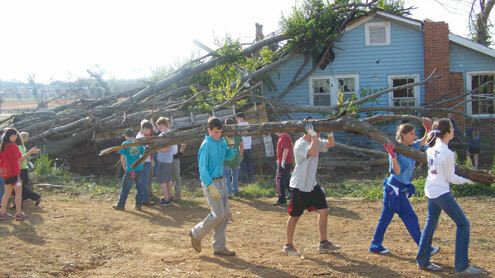
The Tuscaloosa Area Volunteer Reception Center (VRC) can be one of the most valuable resources available to our community during a major disaster. Across the nation, emergency management professionals recognize the importance of organizations that can quickly mobilize and deploy large numbers of volunteers to meet a wide range of community needs. In Alabama, many counties have experienced the benefits of VRCs following storms and other disasters.
While tornadoes are among the most common disasters affecting Tuscaloosa County, the VRC can support response efforts for a variety of incident types.
It is important to note that the VRC may not be activated for every disaster. Some events, such as smaller tornadoes, flooding incidents, or localized emergencies, may not impact enough residents or generate sufficient volunteer turnout to justify activation. However, in larger events, affected communities often see an influx of local, statewide, and national volunteer groups, as well as individual volunteers, all wanting to help.
Without an organized system, these well-intentioned efforts can unintentionally create a “disaster within the disaster” by overwhelming impacted areas. The VRC helps bring structure and coordination to volunteer efforts, allowing city and county governments to manage resources effectively during an already chaotic time.
Recent examples of VRC activation include the April 27, 2011, tornado outbreak and the flooding associated with Tropical Storm Claudette on June 19, 2021, which impacted the City of Northport.
We encourage all volunteers—both individuals and organized groups—to register with the VRC if it becomes active. To check the status of the Tuscaloosa County VRC, please monitor Tuscaloosa County EMA’s social media pages, local news outlets, and updates from affected municipalities for information such as hours of operation and current needs.
Donations
Donations are appreciated, but the VRC it is not the correct location to take them. Though the VRC may accept a few cases of bottled water, bottles of sunscreen, a few tools, or other items (depending on space), the majority of donations will need to be sent to a donations gathering point or a designated community organization that can match the items with the families most in need.
During small events, donations may be routed through local non-profits such as Temporary Emergency Services (TES), Wings of Grace, and several others. If a large event occurs, in combination with the non-profit agencies listed above, a donation warehouse will be established for the sorting of goods before they are distributed.
What Volunteers Can Expect
Should a Volunteer Reception Center (VRC) be activated, you may encounter members of the public who have been affected by the disaster. They may be thankful, scared, frustrated, or even angry. Regardless of their emotions, remember that your willingness to volunteer and help your community is greatly appreciated.
When volunteers arrive at the VRC to register, they will go through a structured registration process. This process is important because it helps safely match each volunteer's skills and abilities with the needs of the community. The registration process consists of five stations. Each volunteer will sign the safety briefing form, submit their hours of service, and turn in their volunteer registration form.
Station #1
At station #1, greeters welcome everyone and give volunteers instruction sheets, registration forms, and a brief orientation to the registration process.
Station #2
Station #3
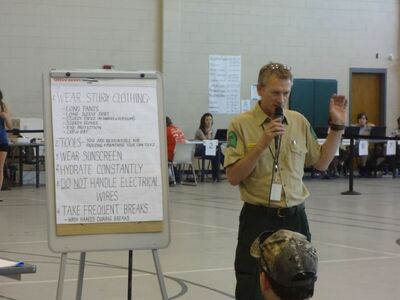
At Station #3, volunteers receive a safety briefing specific to the disaster event. This briefing covers general safety topics, such as staying hydrated and wearing gloves to protect their hands, as well as incident-specific guidance, such as proper debris placement and sorting following a tornado or flood.
Station #4
At Station #4, volunteers are assessed based on their skills, experience, and capabilities and are matched with an appropriate work assignment. Typical assignments may include debris removal, donation sorting, muck-out operations, rehabilitation and repair, or other recovery activities.
Station #5
Station #5 is the final stop before deployment. Volunteers receive a badge or other form of identification before reporting to their assigned work site. Depending on availability, they may also receive donated supplies such as water, gloves, sunscreen, safety glasses, or basic hand tools.
FAQ
What Should I Bring?
- Closed-toe shoes or work boots
- Long pants
- Work gloves (if available)
- Hat and sunscreen
- Refillable water bottle
- Identification
- Any required medications
Do I need experience?
No. In most disasters, there is a role for anyone who is willing to help. Depending on the type and scale of the disaster, volunteer assignments may include debris removal, donation sorting, administrative support, or other recovery activities. Volunteers are matched to assignments based on their skills, abilities, and the community's needs.
What if I have specialized skills?
If you have skills such as heavy equipment operation, construction, chainsaw operation, or amateur (ham) radio experience, please let us know before arriving or during registration so we can match you with an appropriate assignment if needed.
Will I get paid?
No. A Volunteer Reception Center (VRC) is for individuals who wish to volunteer their time to assist with disaster response and recovery. Volunteers should not expect to receive compensation.
Individuals or companies seeking paid work should contact the affected community's local government and follow the appropriate procedures, such as obtaining any required business licenses or permits. This helps protect disaster survivors from fraud and ensures recovery efforts are properly coordinated.
Will I have a place to stay if I come?
Maybe. Lodging availability depends on the location and severity of the disaster. If hotels or other lodging facilities have been impacted, accommodations may be limited or unavailable. In some cases, churches or other community organizations may be able to assist with housing large volunteer groups, but this cannot be guaranteed.